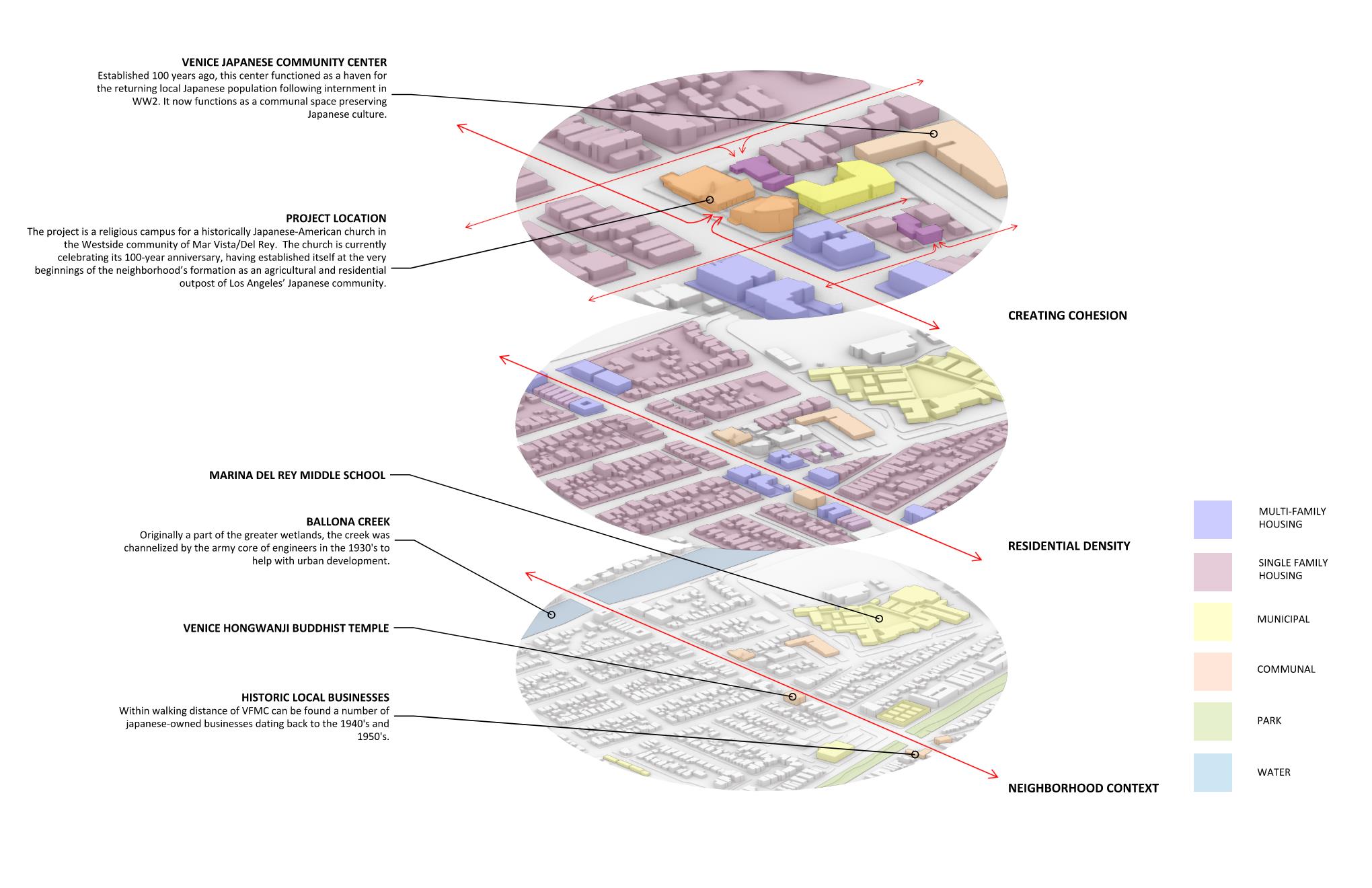

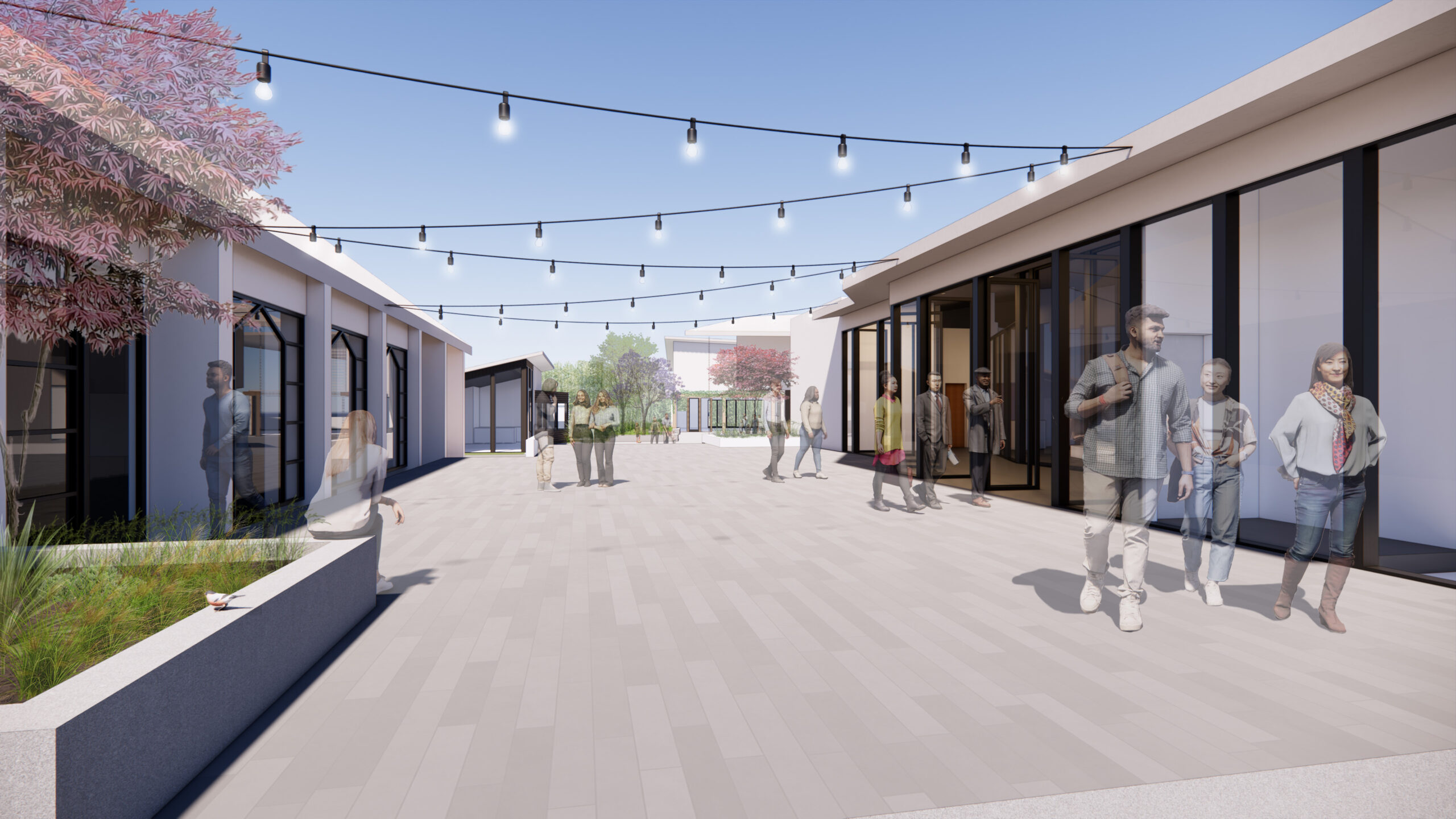
The immediate neighborhood, while perhaps not evident to the passer-by traveling on Centinela, is a loosely woven mix of single-family residential, mostly small homes dating from the 1940’s and 50’s; multifamily housing of 1, 2, 3 and 4 stories; schools (2 within 4 blocks of the campus site); religious uses, including a Buddist temple one block away, and small businesses. Some of these businesses have been Japanese-American owned and in their current location since the 1940’s and 50’s. In the immediate area are municipal uses including a police station and DWP facility. Community functions include the Venice Japanese Community Center immediately adjacent to the west.
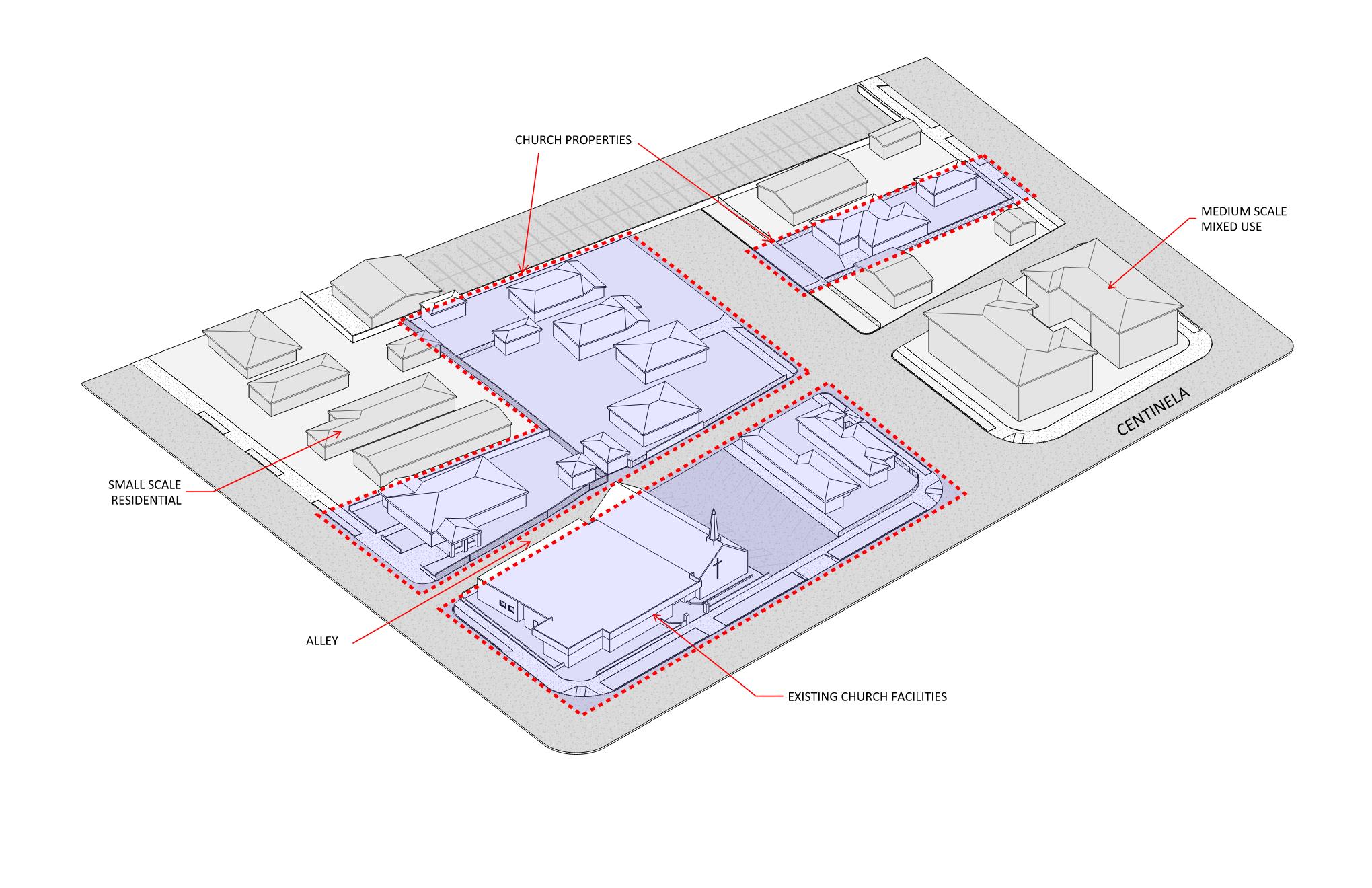
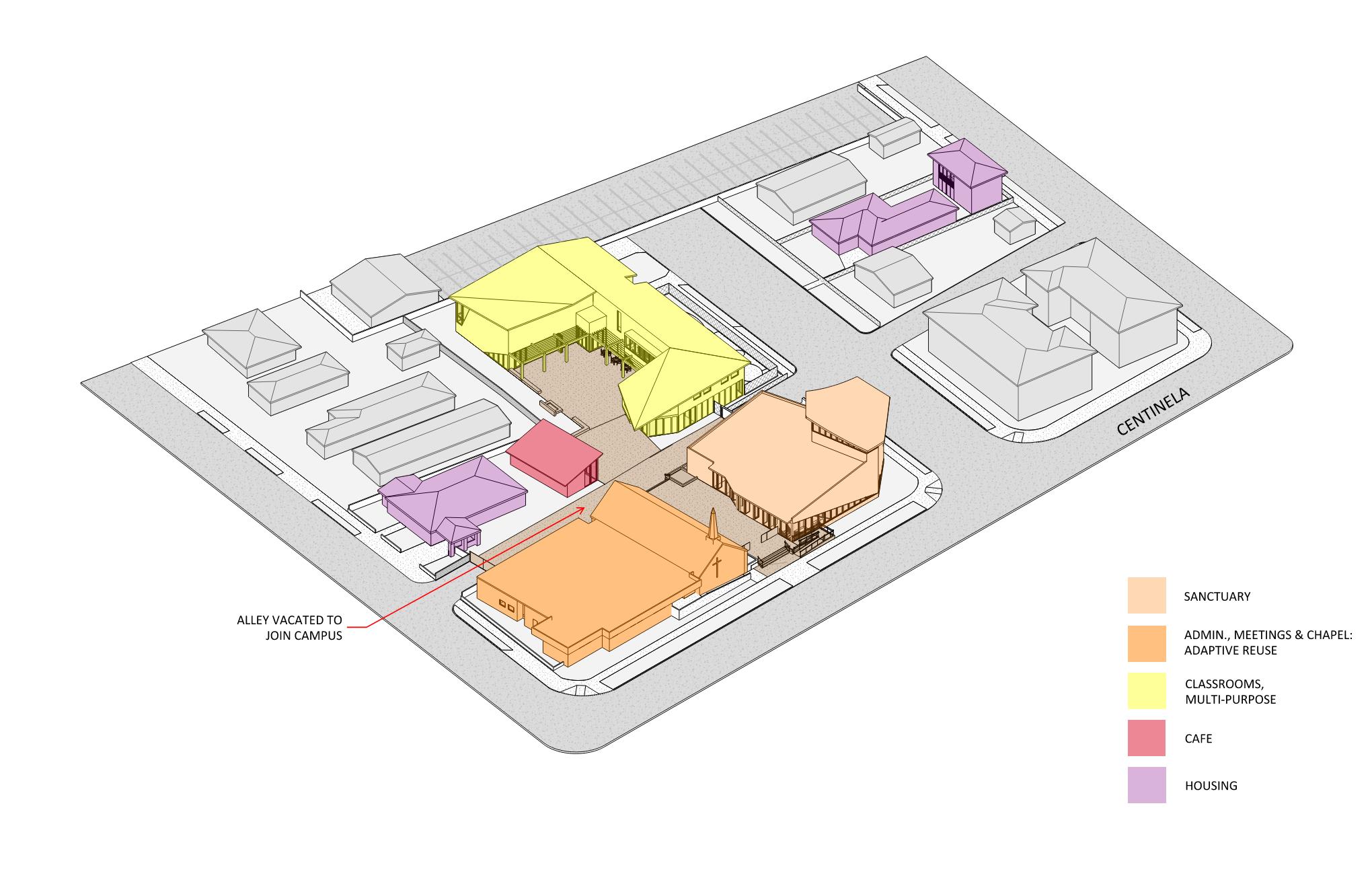
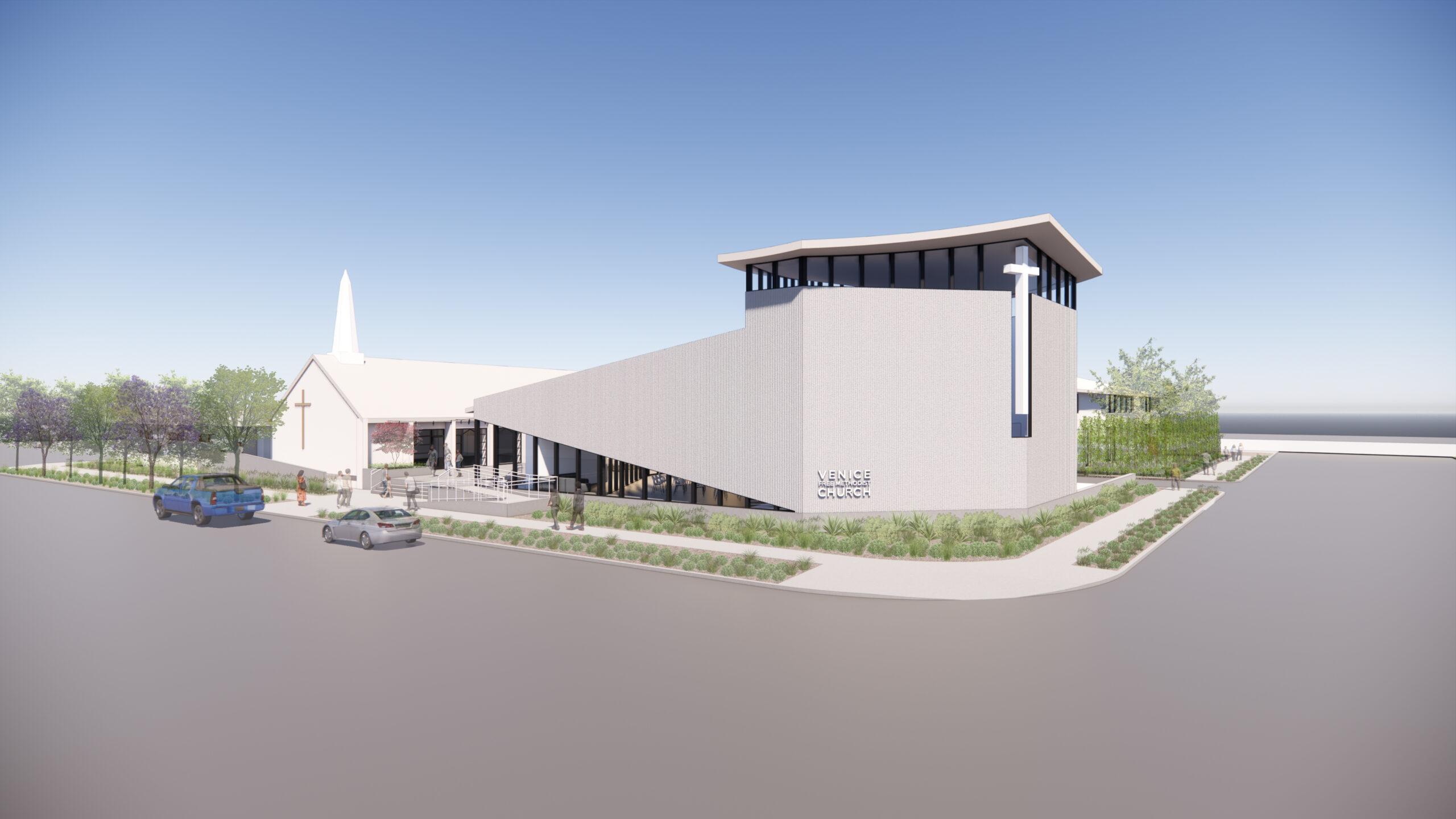
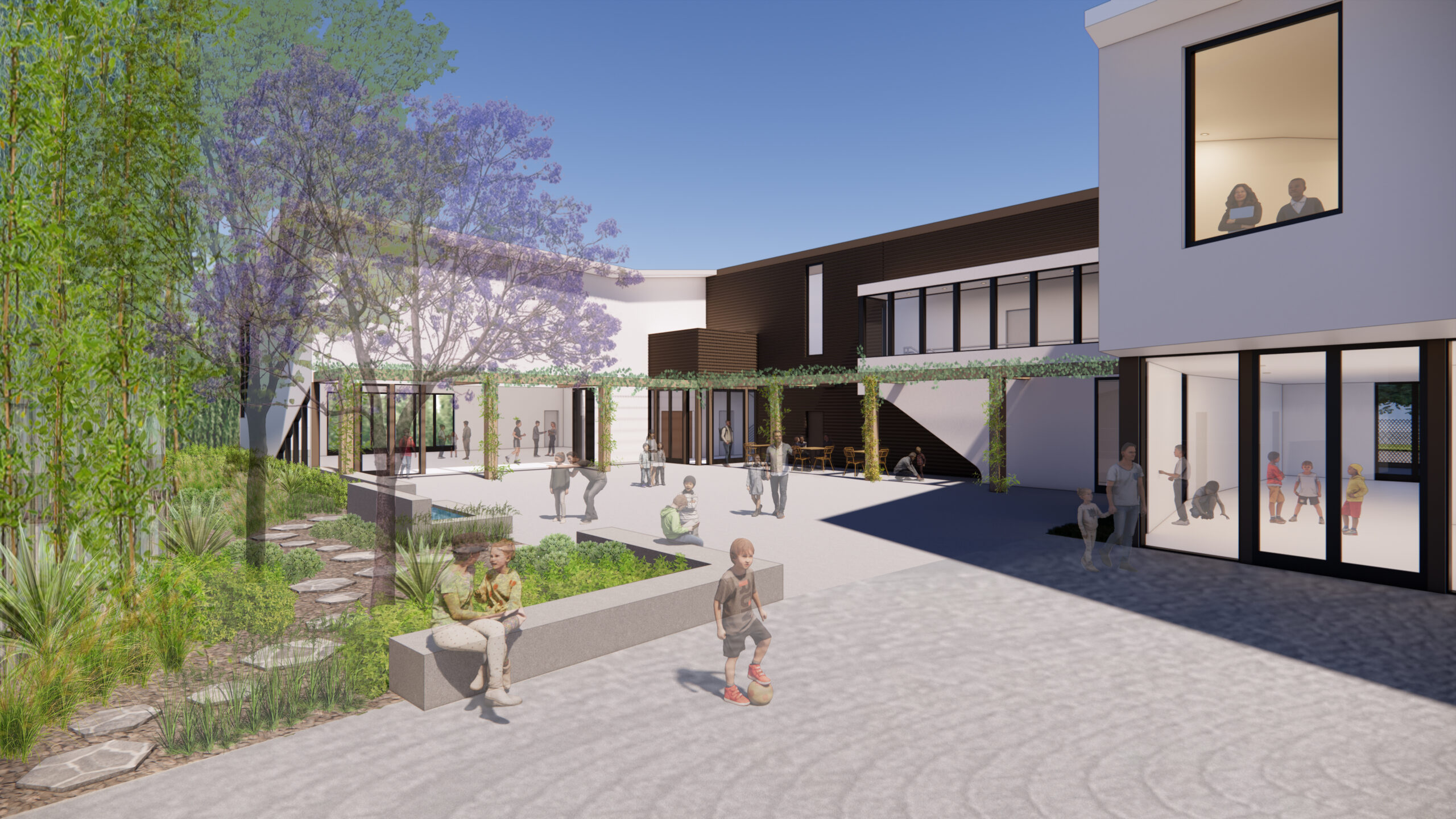
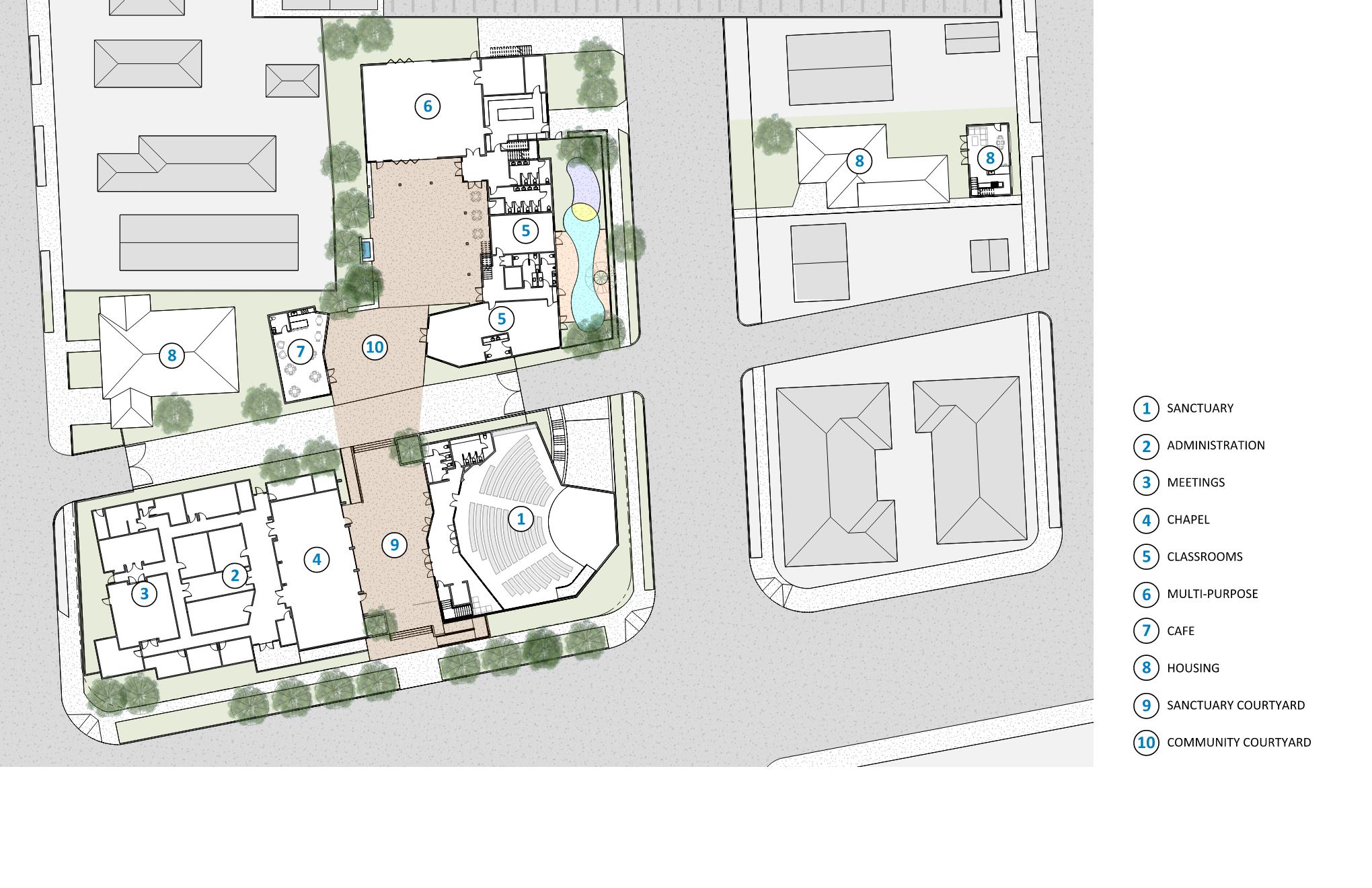
The campus design creates an overall plan that unifies the existing facility with several adjacent residential properties acquired by the Church over the years. It seeks to knit together disparate parts of the eclectic neighborhood; becoming a “knuckle” that bridges both residential and community functions. The project adaptively reuses the existing church and administration building, and extends the campus with a new sanctuary, school, gym, café, community courtyards, and importantly, housing for clergy, visiting scholars, missionaries and interns, who would otherwise not have the resources to live near the Westside campus.
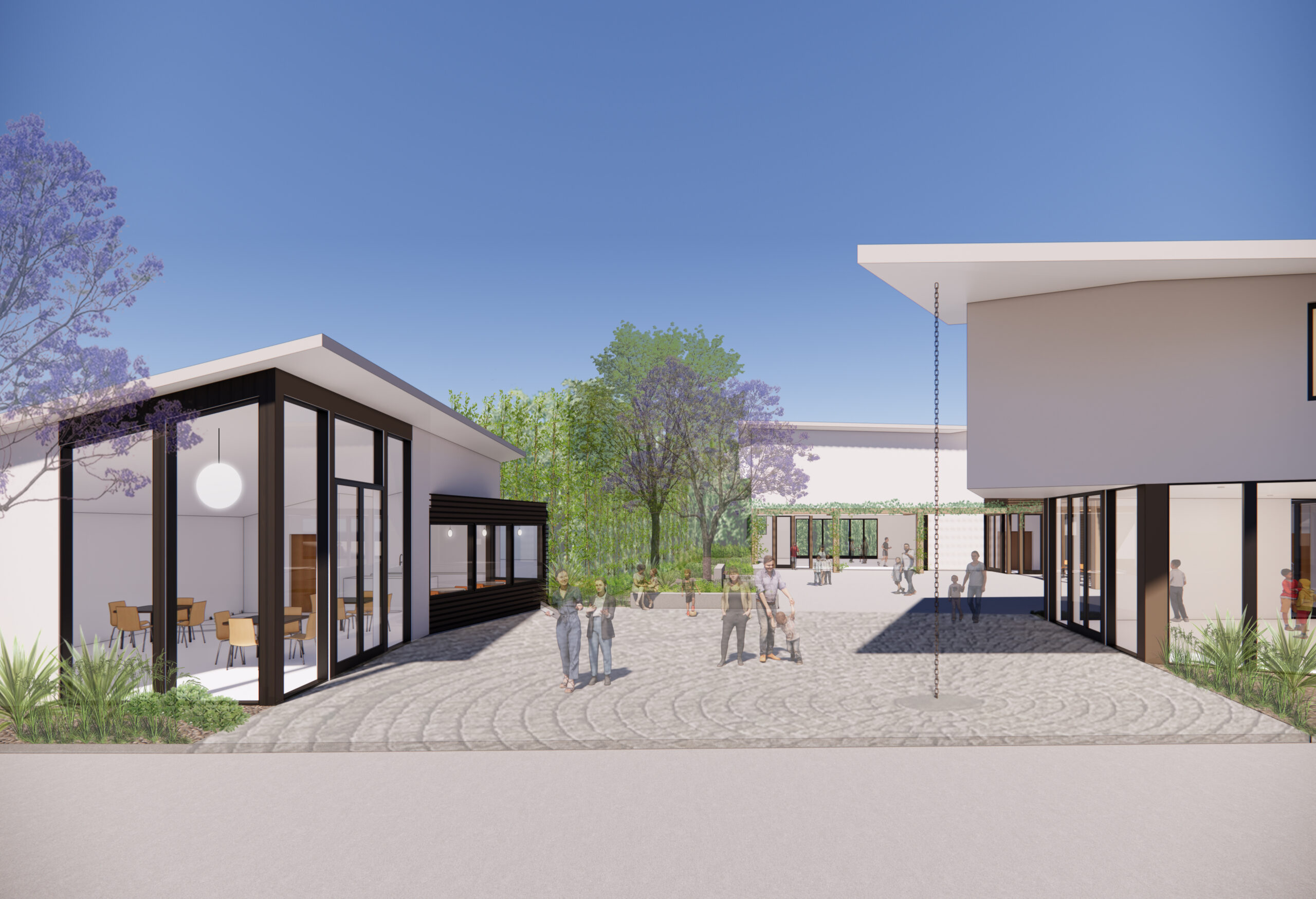
The design recognizes the interplay between residential use and community functions. It aspires to be neighborhood friendly, engaging with the neighbors, respectful of the existing scale and context. At the same time, the design reflects the ethos of the Church community, which is to bridge across cultures, ages and stages, and to be welcoming to all.